
California is putting public investment behind a simple idea: materials people no longer need can still hold economic value. In June 2026, CalRecycle announced a $41 million package of grants and loans to expand recycling access, strengthen textile recovery, and support paid training for young Californians. The investments connect waste reduction with work experience, local business growth, and more convenient recovery options.
The package includes $30.6 million for 13 certified Local Conservation Corps, $10 million for added California Redemption Value redemption options, and an $800,000 loan for a Los Angeles County company to expand textile processing. Each investment serves a different part of the circular economy. Together, they show how California can pair environmental goals with practical pathways for workers, communities, and businesses.
California invests in a circular economy
A circular economy keeps useful materials in use for as long as possible. Instead of treating an item as waste after one use, it emphasizes reuse, repair, collection, processing, and new manufacturing. It needs accessible collection, trained workers, reliable processors, and businesses that can make products from recovered material.
The CalRecycle announcement on the 2026 awards describes the investment as support for recycling infrastructure, paid job training, and material recovery. That makes this more than a recycling story. It is also a workforce and local-business story, with projects intended to make recovery systems easier to use and more capable of turning discarded material into valuable products.
For households, circular systems make sustainable choices more realistic when drop-off, redemption, and reuse options are nearby. For businesses, they create demand for sorting, processing, repair, reuse, and manufacturing skills.
Three awards with distinct roles
The June package covers three connected needs: paid workforce experience, beverage-container redemption, and textile-recycling capacity. These are state-supported projects with specific recipients and implementation plans, not guarantees of individual jobs or services in every neighborhood.
Paid training for young Californians
Thirteen certified Local Conservation Corps received $30.6 million for paid job training and career pathways through recycling, conservation, and community-improvement projects. Corpsmembers may gain hands-on experience with waste tires, beverage containers, used oil, e-waste, and other collected materials.
CalRecycle’s Local Conservation Corps program serves Californians ages 18 to 26 through paid service, education, and career development. Programs may combine work experience with mentoring, vocational training, high school diploma support, or community-college coursework.
More options to redeem CRV containers
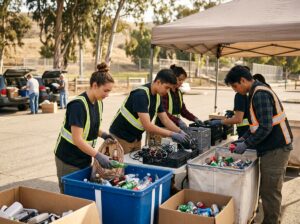
Circular CRV Solutions received $10 million through a Beverage Container Redemption Innovation Grant. CalRecycle says the nonprofit dealer cooperative will add cash-in sites, mobile recycling, and bag drop-off services, including in communities with limited access to redemption locations. Better access can make a familiar recycling action more convenient, while helping containers return to the material stream instead of being thrown away.
Expanded textile recovery in Los Angeles County
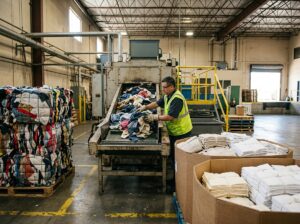
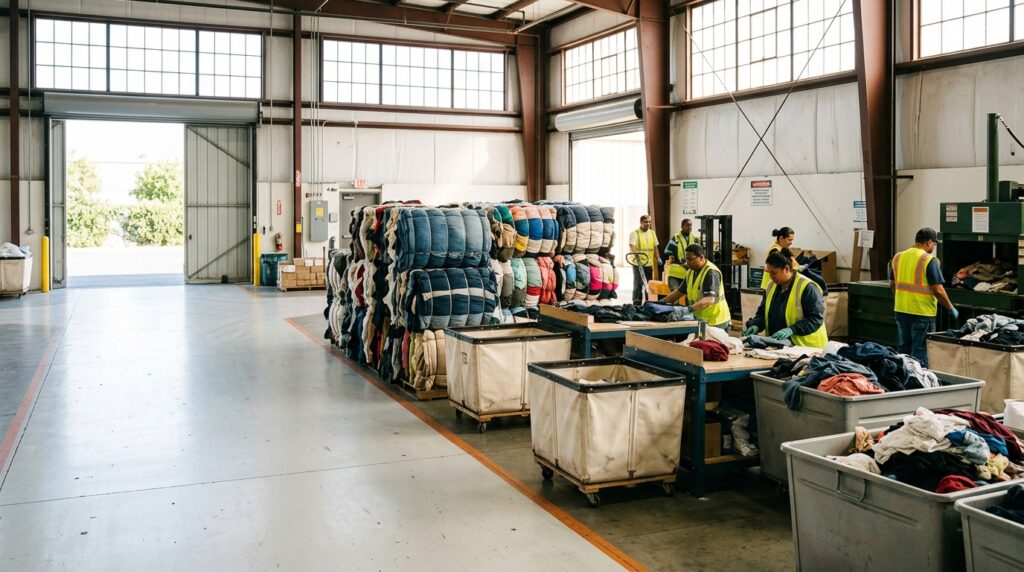
Peerless Materials Company received an $800,000 Recycling Market Development Zone loan to quadruple its capacity to turn old textiles into industrial wipers, absorbent pads, and other reusable items. Collection alone cannot create a circular system if material cannot be sorted, prepared, and made into useful products.
Why textile recycling is gaining urgency
Clothing, linens, towels, and other fabric products can be difficult to recover at scale. CalRecycle reports that Californians discard 1.2 million tons of textiles each year. The state’s textile stewardship program is intended to increase collection, reuse, repair, and recycling while reducing textile-supply-chain impacts.
The California Textile Stewardship program places responsibility on covered apparel and textile producers to support the collection and responsible management of their products. The program is moving through its implementation milestones. CalRecycle lists producer participation requirements, a needs assessment expected in 2027, regulations expected no earlier than July 2028, and full implementation of an approved producer plan in 2031.
That policy timeline helps explain why the Peerless Materials loan matters now. It is not a statewide solution, but it is a local example of the processing infrastructure a broader collection and stewardship system will need.
What green careers can look like
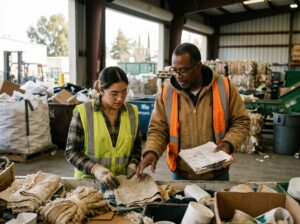
Green careers are not limited to one job title or industry. In a circular economy, workers may collect materials, operate equipment, manage logistics, inspect quality, maintain machinery, educate the public, design products, or coordinate programs. Some roles require technical training, while others can be an entry point to environmental services, manufacturing, public works, or business operations.
The Local Conservation Corps investment connects paid experience to community-serving work. Our article on the future of work in California’s green economy explores how training, infrastructure, and workforce development can create pathways into growing sectors.
California’s Recycling Market Development Zone program also illustrates the business side of the transition. It offers California businesses that use materials from the state’s waste stream potential permitting assistance, technical assistance, loans, and marketing support. The RMDZ program is designed to help recyclers and manufacturers expand operations or incorporate recovered content into products.
How residents and businesses can help
Residents can support textile recovery by choosing the right option for each item. Clothing in usable condition may be suitable for reuse or donation. Worn or damaged textiles may need a dedicated collection or recycling outlet. Rules vary, so use local guidance instead of placing textiles in curbside bins unless a provider specifically accepts them.
Businesses can consider whether their materials have a reuse, repair, recycling, or recovered-content opportunity. Our guide to zero-waste living in California communities offers related ideas for reducing waste through practical choices.
California’s green-business environment depends on ventures that can make sustainable practices operational, not merely aspirational. The state investments in training, redemption access, and textile processing show how public programs can support that work. For more perspective on the wider opportunity, see our article on why California supports green business growth.
Turning discarded materials into opportunity
The June 2026 CalRecycle awards are a focused investment in the infrastructure behind a circular economy. Paid Corps training helps young Californians develop experience. New CRV options can make redemption easier. Textile-processing capacity gives old fabrics a path toward useful new products.
Results will depend on careful implementation, local access, strong end markets, and continued participation from residents, businesses, and public agencies. But the direction is clear. California is treating waste reduction as a way to build skills, strengthen local businesses, and recover more value from materials that would otherwise be lost.