
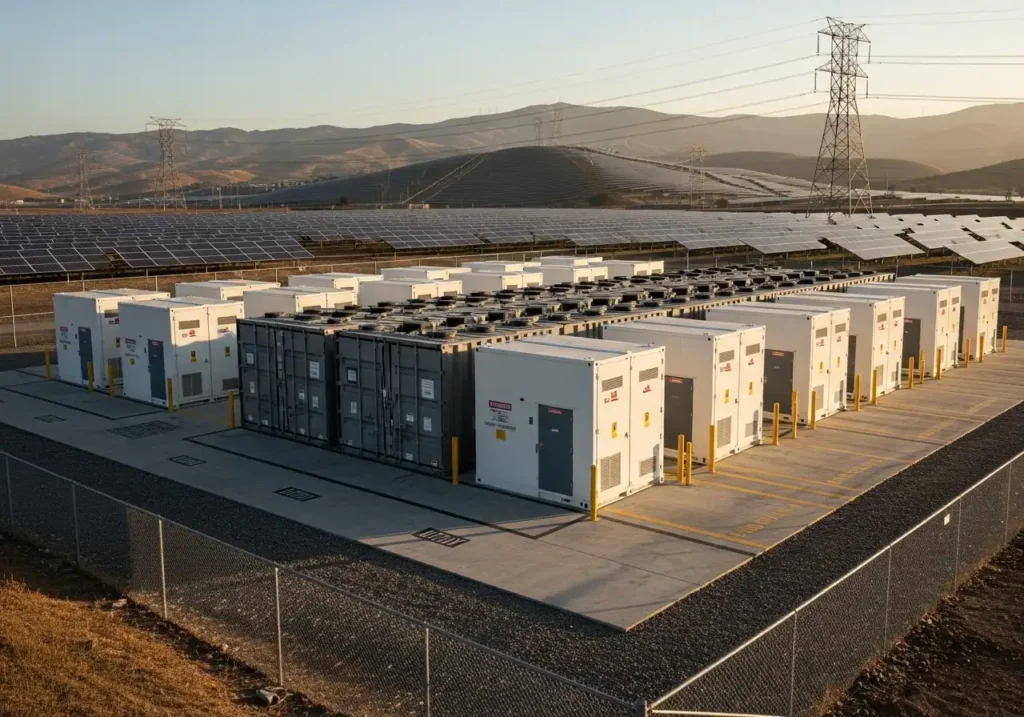
California has become a global leader in battery energy storage, and the impact is already visible across the state’s power grid. Over the past few years, battery storage capacity has expanded at a pace few regions can match, helping reduce blackout risks, balance renewable energy supply, and strengthen grid reliability during periods of high demand.
This rapid growth represents more than just a technical upgrade. It reflects a major shift in how California produces, stores, and uses electricity, especially as renewable energy sources like solar and wind continue to replace fossil fuels.
What Is Battery Storage and Why It Matters
 Battery energy storage systems store electricity for later use. In California, these systems often collect excess power generated during the day, especially from solar panels, and release it back to the grid when demand rises in the evening.
This capability addresses one of the biggest challenges of renewable energy. Solar and wind power are clean and abundant, but they do not always align with peak electricity demand. Battery storage helps close that gap, keeping electricity available when people need it most.
As California continues expanding renewable generation, battery storage plays a critical role in making clean energy practical and reliable rather than intermittent.
California Leads the Nation in Battery Storage Growth
California now operates more utility-scale battery storage than any other state, with capacity increasing dramatically year over year. Large battery installations are spread across urban centers, rural communities, and areas near renewable energy plants.
This growth has transformed how the grid operates. Instead of relying solely on gas-powered peaker plants during high-demand periods, grid operators increasingly turn to batteries to supply fast, flexible energy.
The result is a more resilient system that responds quickly to sudden demand spikes, heat waves, or unexpected power disruptions.
Reducing Blackout Risks During Heat Waves
Extreme heat has long posed a challenge for California’s power grid. High temperatures increase air conditioning use while simultaneously stressing transmission infrastructure.
Battery storage has already proven its value during recent heat waves. Stored energy has helped meet evening demand when solar production declines, reducing the likelihood of rolling outages.
By delivering power precisely when demand peaks, batteries provide a buffer that keeps the grid stable even under difficult conditions.
Supporting Renewable Energy Without Sacrificing Reliability
One of the most important benefits of battery storage is its ability to support renewable energy growth without compromising reliability.
As solar and wind capacity expands, batteries help prevent excess energy from going to waste. Instead of curtailing renewable generation, surplus power can be stored and used later.
This makes renewable energy more efficient, cost-effective, and dependable, strengthening California’s transition to a cleaner energy system.
You can read more about California’s clean energy progress in our related coverage on renewable infrastructure and sustainability initiatives.
Economic Benefits for Communities Across California
The expansion of battery storage is also delivering economic benefits statewide. Construction, engineering, maintenance, and manufacturing related to energy storage systems support thousands of jobs.
Local governments benefit from increased tax revenue, while communities near storage facilities often see infrastructure improvements tied to grid upgrades.
Battery storage investments also help stabilize electricity prices by reducing reliance on expensive emergency power sources during peak demand.
Improving Grid Flexibility and Emergency Response
Battery storage systems respond almost instantly, making them especially valuable during emergencies. When power plants fail or transmission lines are damaged, batteries can supply electricity within seconds.
This flexibility improves grid resilience during wildfires, storms, and other disruptions that can affect energy supply.
For essential services such as hospitals, emergency response centers, and cooling facilities, reliable power access plays a crucial role in public safety.
Environmental Benefits Beyond Emissions Reduction
Battery storage does more than reduce greenhouse gas emissions. By lowering dependence on fossil fuel peaker plants, it also helps reduce local air pollution.
Cleaner air improves public health outcomes, especially in communities historically affected by industrial emissions and heavy traffic.
Energy storage further supports land-use efficiency by maximizing output from existing renewable installations rather than requiring constant expansion.
Challenges and Responsible Expansion
While battery storage offers significant advantages, responsible deployment remains essential. Grid planners, regulators, and energy providers continue working on safety standards, recycling strategies, and long-term system planning.
Ongoing improvements in battery technology aim to increase lifespan, reduce material intensity, and enhance environmental sustainability.
California’s approach emphasizes careful regulation alongside innovation, helping maintain public trust as capacity grows.
Why Battery Storage Is Good for California’s Future
 California’s fast-growing battery storage capacity strengthens the state’s energy independence, supports climate goals, and protects residents from power disruptions.
By pairing renewable energy with advanced storage, California demonstrates that a clean energy future can also be reliable and economically beneficial.
As energy demands continue evolving, battery storage stands out as a foundational tool shaping a more resilient, sustainable power grid for generations to come.
For more stories highlighting progress across the state, explore our latest articles on California innovation, infrastructure, and sustainability.