
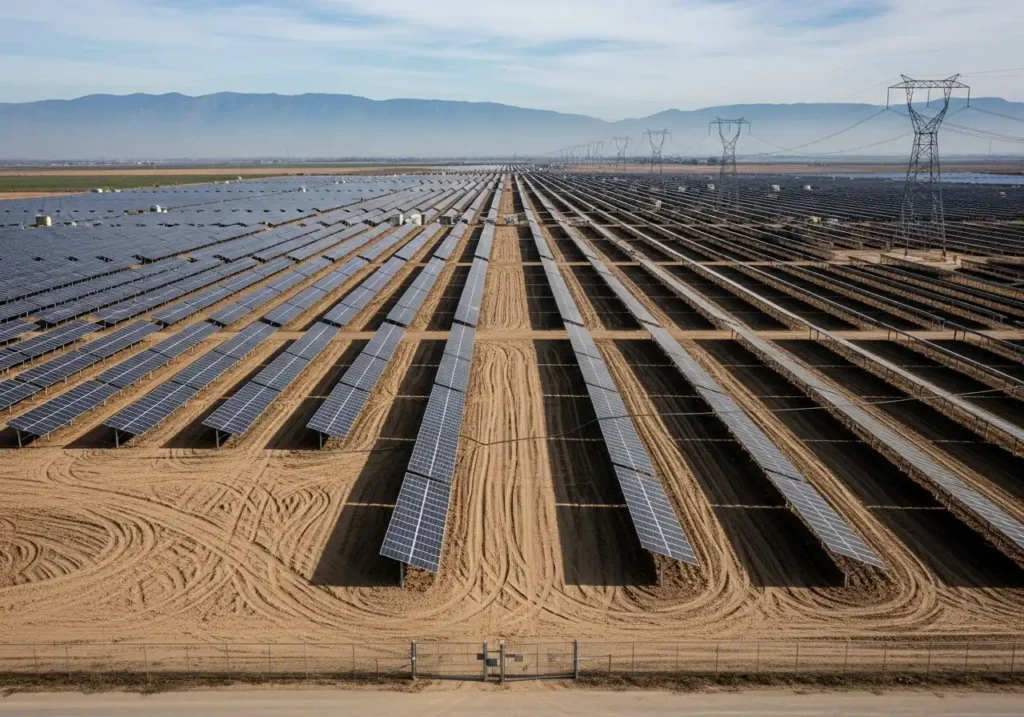
California continues to strengthen its position as a clean energy leader, and a newly approved solar project in the Central Valley highlights just how ambitious that effort has become. Plans are underway for one of the largest solar energy developments in the world, a project that could reshape electricity production, land use, and economic opportunity across the region.
The initiative proposes converting large portions of land into solar generation and energy storage facilities, creating a new source of clean power while supporting communities that have long faced environmental and economic challenges. For California, the project represents another step toward a more sustainable and resilient energy future.
A Solar Project on a Massive Scale
 The proposed Central Valley solar project spans approximately 136,000 acres of land, an area larger than many major cities. When fully developed, it has the potential to generate enough electricity to supply a significant share of California’s energy needs over the coming decades.
This scale places the project among the largest solar developments ever planned, not only in the United States but globally. Unlike smaller installations, large-scale projects like this one can deliver consistent, utility-level power that supports statewide demand rather than serving a limited local area.
By pairing solar generation with energy storage and transmission infrastructure, the project aims to deliver power when it is most needed, including evenings and peak demand periods.
Why the Central Valley Plays a Key Role
The Central Valley occupies a unique position in California’s economy and environment. Long known as an agricultural powerhouse, the region has also faced persistent challenges related to water scarcity, drought, and declining farmland productivity.
As water constraints limit traditional agricultural use in some areas, solar development offers an alternative that keeps land productive while reducing pressure on water resources. Solar facilities require far less water than many crops, making them a practical option in drought-prone regions.
This shift does not replace agriculture entirely, but it provides flexibility for landowners and local agencies seeking sustainable land use solutions that align with long-term environmental realities.
Job Creation and Economic Impact
 Large infrastructure projects often bring economic benefits, and this solar development is no exception. Construction alone may support thousands of jobs over multiple phases, including roles in engineering, electrical work, project management, and site maintenance.
Once operational, the project is expected to create permanent jobs tied to system monitoring, maintenance, and grid integration. These roles contribute to workforce development in renewable energy, a sector that continues to grow across California.
In addition to direct employment, surrounding communities may see indirect economic activity through increased demand for local services, housing, and transportation.
Supporting California’s Clean Energy Goals
California has set ambitious targets for reducing greenhouse gas emissions and transitioning to renewable energy sources. Large-scale solar projects play a central role in meeting those goals.
The Central Valley solar project supports the state’s broader clean energy strategy by expanding renewable capacity without relying on fossil fuels. Combined with battery storage, the project helps stabilize the grid while reducing dependence on gas-powered plants during peak demand.
This approach aligns with California’s broader progress in renewable energy, including milestones where clean sources supply the majority of electricity used across the state.
Energy Storage and Grid Reliability
One of the most important aspects of the Central Valley solar project is its integration of energy storage. Solar power generation peaks during daylight hours, while electricity demand often increases in the evening.
Battery storage systems help bridge this gap by storing excess energy and releasing it later. This improves grid reliability and helps reduce the risk of outages during heat waves or periods of high demand.
Energy storage also reduces the need for emergency fossil fuel generation, supporting cleaner air and more stable energy pricing over time.
Environmental Benefits Beyond Emissions
While reducing emissions remains a primary benefit, the environmental impact of large-scale solar projects extends further. By replacing fossil fuel generation, solar energy helps improve air quality, particularly in regions affected by pollution and industrial activity.
Cleaner air contributes to better public health outcomes, especially for communities that have historically experienced higher exposure to pollutants.
Developers and regulators continue working to minimize ecological impacts through responsible siting, habitat protection measures, and long-term land management planning.
Community Perspectives and Responsible Development
As with any large project, community input plays an important role in shaping outcomes. Some residents and advocacy groups have raised questions about land use, visual impact, and environmental preservation.
Project planners emphasize that environmental review processes and public engagement help address concerns while balancing the need for clean energy infrastructure.
For many local leaders, the project represents an opportunity to diversify the regional economy while contributing to statewide climate goals.
Why This Project Is Good for California
The Central Valley solar project reflects a broader shift in how California approaches energy, land use, and economic development. By investing in large-scale renewable infrastructure, the state supports:
- Cleaner and more reliable electricity generation
- Job creation in growing renewable energy sectors
- Reduced water use compared to traditional land applications
- Improved air quality and public health outcomes
Projects like this demonstrate how innovation and sustainability can work together to address long-term challenges.
Looking Ahead
If completed as planned, the Central Valley solar project may serve as a model for future renewable development across the country. It shows how states can adapt land use strategies, strengthen energy infrastructure, and support economic growth at the same time.
For California, the project reinforces a commitment to clean energy leadership while offering tangible benefits to local communities. As renewable technology continues to evolve, large-scale initiatives like this one highlight how progress in sustainability can also be progress for people.
To explore more stories about clean energy innovation and economic progress, browse our Clean Energy and Sustainability categories.