

The landscape of California’s capital region is shifting, and for the first time in decades, that shift is rooted deeply in the ancestral soil of the state’s first people. The recent groundbreaking of the California Indian Heritage Center (CIHC) in West Sacramento marks a monumental turning point in how the Golden State preserves, presents, and honors its complex history. This is not merely the construction of a museum; it is the establishment of a living sanctuary for the 109 federally recognized tribes of California.
The Significance of the CIHC Groundbreaking
For years, the story of California’s heritage was often told through a narrow lens, focusing heavily on the gold rush and the mission era. However, the California Indian Heritage Center groundbreaking signals a statewide commitment to the “Truth and Healing” movement. Located at the historic confluence of the American and Sacramento Rivers, the site sits on land that has been a crossroads for the Nisenan, Maidu, and Miwok peoples for millennia.
As a project dedicated to the history of the county and the broader state, the CIHC serves as an essential counter-narrative. It provides a space where indigenous communities can tell their own stories of resilience, rather than having those stories interpreted by outsiders. This shift toward “self-representation” is a hallmark of modern heritage preservation.
Architecture and Ecological Design
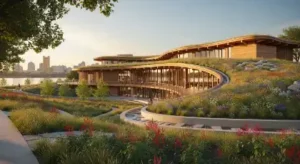
The design of the center is as significant as its contents. Spanning over 50 acres, the campus is designed to blend seamlessly into the riparian landscape. Architects have prioritized “Traditional Ecological Knowledge” (TEK) in the planning phases, ensuring that the flora planted on-site consists of native species used by California tribes for food, medicine, and basketry for centuries.
The first phase of construction includes:
- The Welcome Portal: A massive outdoor pavilion designed to orient visitors to the tribal geography of California.
- The River Plaza: A gathering space that honors the vital role of California’s waterways.
- Digital Archives: A state-of-the-art facility for “digital inheritance,” where oral histories and ancestral languages are preserved using modern AI and recording technologies.
Connecting the Past: From Bidwell Mansion to the CIHC
When we look at landmarks like the Bidwell Mansion, we see the preservation of a specific era of California’s development. However, the CIHC stretches the timeline back thousands of years further. By integrating the two, researchers and history enthusiasts can gain a more holistic view of our state’s evolution.
Just as the restoration of the Honey Run Covered Bridge represents a community coming together to save a piece of its heart, the CIHC represents a statewide community coming together to acknowledge a shared and often painful past, while building a bridge to a more inclusive future.
Why Digital Inheritance is the Future of Heritage
In a world increasingly driven by technology, the CIHC is pioneering the concept of the “living archive.” While physical artifacts are vital, the intangible heritage—songs, stories, and dialects—is often the most at risk. The center’s focus on recording these elements ensures that future generations have access to their cultural lineage, a concept often discussed in the context of digital afterlife and heritage preservation.
This approach transforms the museum from a “cabinet of curiosities” into a vibrant educational resource. For educators and students, it provides a primary-source-driven look at how indigenous technologies in land management and water conservation are more relevant today than ever in the face of California’s changing climate.
The Economic and Cultural Impact on West Sacramento
 The development of the California Indian Heritage Center is expected to be a major cultural draw for the region, rivaling the impact of the Crocker Art Museum or the State Capitol. It positions West Sacramento as a premier destination for heritage tourism. For those of us tracking local landmarks and their influence on community identity, the CIHC is the most significant addition to the regional map in a generation.
A Call to Preservationists
The groundbreaking is only the beginning. As the structures rise from the earth, the work of curation and community engagement continues. Preservation is not a static act; it is an ongoing dialogue between what was, what is, and what will be. Whether it is through protecting a historical bridge or establishing a multi-million dollar heritage center, the goal remains the same: to ensure that the stories that make us “California” are never forgotten.
Key Takeaways for History Enthusiasts:
- The CIHC is the largest project of its kind in North America dedicated to indigenous cultures.
- It focuses on 109 federally recognized tribes plus numerous non-recognized tribes.
- The site selection was deliberate, choosing a “sacred confluence” of two major rivers.
As we continue to explore the history of the county and the landmarks that define our identity, the California Indian Heritage Center will undoubtedly become the cornerstone of our state’s historical narrative. Stay tuned to our blog as we track the progress of this project and explore more hidden gems of California’s heritage.